
Views: 358 Author: Site Editor Publish Time: 2026-04-30 Origin: Site


Outdoor job sites are unforgiving. Rain, morning dew, cement dust, coastal air, temperature swings, and constant handling all attack metal surfaces in different ways. For access equipment like a Galvanized Painted Scaffolding Ladder, the finish is not just a cosmetic choice—it’s part of how the ladder survives repeated transport, stacking, and field use. Many buyers ask the same practical question: galvanized vs painted scaffolding ladder—which finish lasts longer outdoors? The honest answer depends on your environment, handling habits, and maintenance discipline. But in most outdoor-heavy scenarios, the decision comes down to how each finish protects the steel when it gets scratched, chipped, or exposed over time.
From our perspective at Tianjin Friend Steel Group, we support customers who supply scaffolding ladders into very different conditions—urban high-rise projects, infrastructure, industrial maintenance, and coastal construction. Over time, we’ve found that “longer lasting” isn’t only about the coating type; it’s about total durability in real handling: impact marks, abrasion from clamps, and exposure to standing water or salty mist.
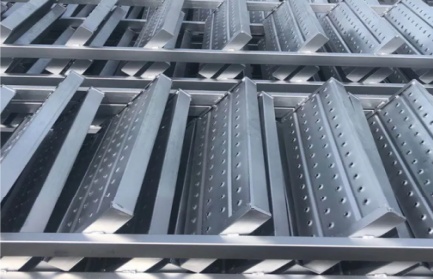
A galvanized finish typically means the steel ladder has been coated with zinc. Zinc acts as a barrier and also provides “sacrificial” protection, meaning it helps protect exposed steel if the surface is scratched.
Outdoor use increases the chance of surface damage during transport and installation. A finish that still protects after scratches has a real advantage.
A painted scaffolding ladder finish uses a protective coating layer applied to the steel surface. When done properly, paint creates a barrier that separates the metal from air and moisture. This is why painted ladders can look clean and uniform—especially when new—and why many contractors like them for projects where appearance and easy identification matter.
· Cost control for high-turnover projects
For short-term builds or projects that replace equipment frequently, paint can be a practical choice because initial cost is often lower than hot-dip galvanizing.
· Color identification for site management
Color helps crews sort equipment quickly by owner, job site, or size category. In busy yards, this can reduce lost items and speed up daily loading.
· Smoother appearance for certain markets
Some users prefer a more consistent look for customer-facing projects, rental inventory presentation, or contractors who want a “clean uniform fleet” appearance.
· Simpler touch-up in some workflows
When the coating is scratched or chipped, some teams prefer the ability to touch up with paint as part of routine maintenance.
However, the key limitation is that paint protection depends heavily on the integrity of the coating film. Once the film chips, cracks, or wears through, moisture can reach the steel directly, and rust can start at those exposed points. That’s why painted finishes often perform best when storage is controlled and touch-up is done quickly—especially in wet climates.
To compare which finish lasts longer outdoors, we focus on two real job-site factors: corrosion exposure and handling damage. Outdoor performance is rarely about “perfect conditions.” It’s about what happens after weeks of rain, dust, stacking, and daily transport.
Outdoor ladders often sit:
· on damp ground
· under rain cover with trapped humidity
· near wet concrete curing zones
· in storage yards exposed to dew
These conditions create repeated wet–dry cycles. Even if the ladder is not directly rained on, humidity trapped under tarps or in crowded storage racks can keep metal surfaces wet for long periods. In that environment, the finish must do two things: block moisture and remain stable through repeated temperature and humidity changes. If water finds a path under the coating—through a chip, scratch, or seam—corrosion often begins locally and spreads over time.
Scaffolding ladders are handled roughly:
· stacked and dragged
· clamped and unclamped
· loaded onto trucks
· bumped by steel pipes and boards
This is the real test for any finish. Outdoor work creates abrasion and impact marks that gradually wear coatings down. The “best” finish is the one that tolerates both corrosion risk and handling damage without failing early. In practice, that means thinking beyond the first week of use. Ask how the ladder will look after months of transport, repeated stacking, and contact with other steel components—and whether your team has a realistic habit of cleaning and touch-up when damage appears.
Here’s a practical comparison based on what buyers typically care about.
Factor | Galvanized Finish | Painted Finish |
Corrosion resistance outdoors | typically stronger | depends on paint integrity |
Behavior after scratches | zinc continues protecting | steel exposed can rust faster |
Maintenance needs | generally lower | often needs touch-up |
Appearance | industrial silver finish | color options, cleaner look |
Suitability for coastal air | usually preferred | requires strict maintenance |
Cost profile | higher upfront, longer life | lower upfront, may replace sooner |
This table is a general guide. Real outcomes depend on coating thickness, surface prep quality, and how the ladder is used and stored.
In most outdoor-heavy projects—especially where ladders are used daily and stored in open yards—galvanized scaffolding ladders usually last longer. The reason is simple: outdoor use almost guarantees scratches and impact marks. Zinc protection helps reduce rapid corrosion at those damaged points, while paint coatings can fail more quickly when the film breaks.
That said, painted ladders can still be a practical choice in certain scenarios:
· short-term projects with controlled storage
· indoor or semi-covered construction sites
· buyers who prefer color coding for inventory management
· operations that already do scheduled touch-up maintenance
The key difference is that painted finishes demand more disciplined maintenance to achieve long service life outdoors.
Salt and humidity accelerate corrosion. In these conditions, galvanized usually has the advantage because minor scratches are less likely to become fast-spreading rust points.
If the environment is relatively dry and ladders are stored under cover, painted finishes can perform well, especially when handling damage is limited.
Construction dust and wet cement residue can hold moisture against the surface. A finish that resists corrosion under residue buildup helps reduce long-term risk.
No finish is “maintenance-free.” The goal is to keep ladders dry when possible and reduce corrosion triggers.
· rinse off heavy cement residue when practical
· avoid long-term standing water storage
· check joints and weld areas periodically
· touch up chips quickly to block moisture
· keep storage racks off wet ground
· avoid dragging to reduce coating damage
Action | Best For | Why It Helps |
Keep ladders off wet ground | both finishes | reduces constant moisture contact |
Clean cement residue | both finishes | prevents moisture trapping |
Touch-up chips | painted finish | blocks rust from starting |
Improve yard storage cover | both finishes | reduces exposure cycles |
To choose between galvanized and painted scaffolding ladders, we recommend answering:
· Will the ladder be used mostly outdoors or mixed indoor/outdoor?
· Is the storage yard covered or open-air?
· Is the site coastal or high humidity?
· How rough is daily handling and stacking?
· Do you have a maintenance routine for touch-up?
· Is color coding important for site management?
If outdoor exposure is heavy and maintenance is minimal, galvanized is often the safer long-term decision.
So, galvanized vs painted scaffolding ladder—which finish lasts longer outdoors? In most outdoor-heavy job sites, galvanized finishes tend to deliver longer service life because zinc protection continues to guard the steel even when scratches and handling marks appear. Painted finishes can still work well when storage is controlled and maintenance routines are consistent, and they offer advantages in color identification and initial cost planning. The right choice is the one that matches your environment, handling intensity, and maintenance reality.
At Tianjin Friend Steel Group, we supply scaffolding ladder solutions for different project needs, including galvanized and painted options designed for reliable site use. If you want support selecting the right finish for your outdoor conditions, or need consistent supply for your scaffolding ladder program, you are welcome to contact Tianjin Friend Steel Group to learn more.
In many outdoor environments, yes. Galvanized finishes typically offer stronger corrosion resistance, especially when the surface gets scratched during job-site handling.
Paint protects well while intact, but chips and scratches expose steel directly. In wet or humid conditions, exposed areas can rust quickly without timely touch-up.
It still benefits from basic care like reducing standing water storage and removing heavy residue, but it generally needs less frequent touch-up than painted finishes.
Consider outdoor exposure level, humidity/coastal conditions, storage method, handling intensity, and whether you have a consistent touch-up maintenance routine.
