
Views: 0 Author: Site Editor Publish Time: 2026-07-01 Origin: Site


Cutting Galvanized Steel Pipe requires navigating the physical toughness of heavy-duty steel and the specific hazards of its zinc coating. Plumbers, contractors, and home DIY enthusiasts routinely face this complex challenge. You might instinctively grab the nearest metal saw. You might assume standard steel-cutting rules apply. However, using the wrong tool leads to compromised threads, accelerated corrosion, or severe health risks like metal fume fever. Your long-term project success depends heavily on matching your equipment to the working environment. This guide provides an objective framework to select the right cutting method based on pipe diameter, spatial constraints, and overall project volume. We follow this framework with a standardized execution and safety protocol. You will learn exactly how to approach each task efficiently. We will show you how to protect the underlying steel layer and keep your lungs safe from toxic off-gassing.
Tool matching is context-dependent: Rotary pipe cutters yield the cleanest cuts for threading, while reciprocating saws are optimal for demolition in tight spaces.
Heat is the enemy: High-friction methods (angle grinders, chop saws) vaporize the zinc coating, creating toxic fumes that require strict PPE and ventilation.
Post-cut treatment is non-negotiable: Any exposed raw steel edge must be sealed with a zinc-rich cold galvanizing compound to maintain system integrity.
Galvanizing adds a protective armor to standard carbon steel. Manufacturers dip the raw steel into molten zinc to create a strong metallurgical bond. The resulting Galvanized Steel Pipe easily resists rust in harsh, wet environments. You must treat this dual-material composition carefully during fabrication.
Physical Traits: You are essentially cutting two distinct metals simultaneously. The outer zinc layer remains significantly softer than the rigid carbon steel core. This physical contrast requires cutting tools strong enough for steel but precise enough not to tear the softer exterior layer.
Heat Sensitivity: Temperature management dictates your overall success. Zinc melts around 419°C (786°F) and vaporizes near 907°C (1665°F). High-speed tools generate immense friction very quickly. Angle grinders easily push temperatures past the critical vaporization point. This intense heat burns the zinc instantly. The reaction releases hazardous zinc oxide gases directly into your workspace.
Structural Integrity: Aggressive cutting tools create harsh microscopic vibrations. These impacts can chip or flake the protective layer far beyond the actual cut line. Damaged edges create highly vulnerable zones. Moisture attacks these bare spots immediately. Premature rust will eventually destroy the structural system from the inside out. You must preserve the coating adhesion during every single cut to prevent failures.
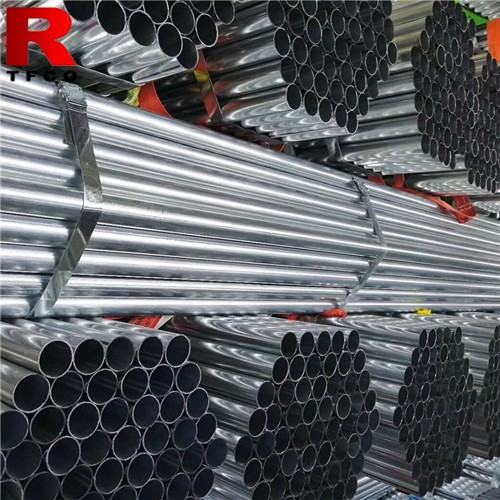
Selecting a cutting tool involves balancing operational speed against personal safety and finish quality. You must evaluate your workspace before plugging in any power tools. We present this decision framework to compare common tools against critical success criteria.
Tool Performance Comparison Chart
Tool Type | Best Application | Cut Quality | Heat Generation | Safety Profile |
|---|---|---|---|---|
Rotary Pipe Cutter | Precision threading prep | Excellent (Square) | Very Low | High (No sparks/fumes) |
Reciprocating Saw | Demolition / Tight spaces | Poor (Rough edges) | Moderate | Moderate (Debris risk) |
Chop Saw / Grinder | High-volume outdoor cuts | Fair (Requires deburring) | Extreme | Low (Toxic fumes/Sparks) |
Hacksaw | Small DIY single cuts | Good | Very Low | High |
Best for: Precision cuts, threading preparation, and spark-free environments.
Pros: A rotary cutter leaves a perfectly square cut. You will generate zero sparks. The process produces zero toxic fumes. Manual versions require no electricity. This independence makes them ideal for remote or extremely wet job sites.
Cons: The operation feels much slower than using motorized saws. You must have full 360-degree clearance around the entire circumference. The mechanical crushing action leaves a heavy internal burr. You must thoroughly ream this burr out before final installation.
Best for: Demolition, in-wall repairs, and tight spatial constraints.
Pros: Reciprocating saws offer exceptional maneuverability. They deliver fast, reliable cutting speeds. A quality blade generates minimal heat compared to abrasive wheels. You can slide the long blade behind installed plumbing infrastructure easily.
Cons: The aggressive stroke leaves a rough, uneven edge. This edge remains strictly unsuitable for immediate threading. You must buy specific heavy-metal cutting blades. Standard wood blades strip their teeth immediately. We recommend selecting thick bi-metal or carbide-tipped designs featuring 14 to 18 teeth per inch (TPI).
Best for: High-volume cutting in well-ventilated workshops or open outdoor settings.
Pros: Abrasive wheels cut extremely fast. They effortlessly handle large-diameter stock like Galvanized Steel Pipe. You can process dozens of identical pieces in minutes.
Cons: Abrasives generate significant frictional heat. They throw dangerous hot sparks across the room. The friction creates thick, toxic zinc fumes instantly. The resulting edge features sharp, jagged burrs. You must perform heavy mechanical finishing before moving to the assembly phase.
Best for: Small DIY jobs or one-off cuts on small-diameter materials.
Pros: Hacksaws remain cheap, universally accessible, and incredibly safe. You completely eliminate flying sparks and hazardous fumes. They sit perfectly in any standard toolbox.
Cons: Manual sawing feels highly labor-intensive. The manual process is entirely inefficient for commercial plumbing or multi-cut applications. Your arm will fatigue quickly on thicker material schedules.
Executing a clean cut requires disciplined patience. You must follow a strict operational sequence to ensure material longevity and personal safety. Let us break down the optimal approach for processing Galvanized Steel Pipe safely.
Phase 1: Preparation & Securing
Measure your required length carefully using a reliable steel tape.
Accurately mark the designated cut line. We strongly recommend wrapping masking tape tightly around the circumference. The straight tape edge provides a high-visibility tracking guide.
Secure the material firmly. Use a dedicated chain vise or a heavy-duty bench vise.
Proper clamping prevents dangerous blade binding. A secure grip guarantees a perfectly square cut. Loose materials always invite unpredictable kickback.
Phase 2: The Cutting Process
If using a pipe cutter: Apply high-quality dark thread-cutting oil to the cutting wheel. Align the wheel directly over your mark. Rotate the tool completely around the circumference. Tighten the handle incrementally per rotation. Never over-tighten. Excessive pressure crushes the pipe wall and ruins the inner diameter.
If using a saw: Start at a very slow speed. Establish a shallow guide groove first. Once the groove forms naturally, increase your speed slightly. Let the sharp blade teeth do the actual work. Avoid forcing heavy downward pressure. Forcing the blade causes rapid overheating and immediate tooth dulling.
Phase 3: Reaming and Deburring
Inspect the freshly cut edge closely under good lighting.
Use a half-round metal file or a dedicated conical pipe reamer.
Remove all sharp internal and external burrs completely.
Assumption transparent: Many novices skip this boring step. Skipping this step restricts future water flow severely. Sharp internal burrs catch debris and create long-term blockages. External burrs will instantly ruin expensive threading dies.
You cannot ignore the biological hazards of vaporized zinc. Workplace safety must remain your primary focus during fabrication.
Mitigating Metal Fume Fever:
Inhaling vaporized zinc oxide triggers a severe biological reaction widely known as metal fume fever. Symptoms mimic a harsh case of the flu. You will experience chills, high fever, intense nausea, joint aches, and tight chest pain. These symptoms typically hit several hours after the initial exposure. Strict prevention remains the only effective strategy.
Required PPE:
Standard cloth masks or basic paper dust masks offer zero protection against metallic gases. You must wear a properly fitted P100 or N95 half-mask respirator designed for welding fumes. Protect your eyes from high-velocity metal shards using wrap-around safety goggles. Wear thick, cut-resistant leather gloves to handle the freshly cut Galvanized Steel Pipe. Raw steel edges act exactly like razor blades.
Environmental Controls:
Always prioritize outdoor work environments. Open air disperses dangerous gases naturally and safely. You must mandate industrial fume extractors when using high-speed abrasive tools indoors. Position the strong extractor hose directly adjacent to the cutting zone. Do not rely on standard room fans. Ceiling fans merely blow the toxic fumes around the enclosed breathing space.
Cutting successfully represents only half the job. You must restore the protective barrier immediately to prevent degradation.
The Vulnerability:
Every single cutting method removes the protective exterior zinc. This action completely exposes the raw carbon steel core to the surrounding atmosphere. Raw carbon steel will rapidly oxidize. Ambient moisture in the air initiates the destructive rusting process within mere hours.
The Solution (Cold Galvanizing):
You must implement a strict cold galvanizing procedure. This chemical process restores the vital sacrificial anodic protection.
Clean the newly cut edge thoroughly using a stiff wire brush.
Wipe the surface clean using a fast-drying solvent to remove residual cutting oils.
Shake your cold galvanizing compound spray can vigorously.
Apply a smooth, even coat of the high-zinc-content spray directly to the exposed steel.
Allow the chemical compound to cure completely according to the specific manufacturer guidelines.
Implementation Risk:
Many operators mistakenly rush the surface cleaning phase. Failing to clear cutting oil, metal shavings, or dirt before painting guarantees failure. The zinc spray will rest on top of the grease rather than bonding physically to the steel. This mistake results in extremely poor adhesion. The coating will eventually flake off, and the system will experience catastrophic rust failure.
Cutting galvanized material correctly demands specific tool knowledge and disciplined physical execution. Summarizing our shortlisting logic: choose manual rotary pipe cutters for absolute precision and clean threading preparation. Select aggressive reciprocating saws for messy demolition work or tight spatial clearances. Reserve high-speed abrasive chop saws strictly for high-volume, well-ventilated workshop environments. Always prioritize your lung safety when intense friction heats the zinc layer.
We strongly urge you to evaluate your specific project environment carefully before purchasing any new blades or tools. Ask yourself directly if you are working indoors or outdoors. Determine if you are prepping a clean edge for threading or merely removing old scrap. Match your tool selection to these field realities. Properly seal your finished edges, and your newly installed structural system will last for decades without incident.
A: Yes, a reciprocating saw equipped with a compact carbide blade serves as the standard industry approach. The tool slides easily into cramped wall cavities. You must ensure the main water or gas supply is completely shut off and drained before beginning your cut.
A: Yes. Standard wood or light-metal blades will strip their teeth almost instantly against the hard carbon steel core. You must use thick bi-metal or carbide-tipped blades specifically designed for heavy metal applications to ensure a clean, efficient cut.
A: We strongly discourage this method. Thermal cutting instantly vaporizes the zinc coating, producing an extreme volume of highly toxic fumes. You should only use thermal methods if strictly necessary in a highly controlled industrial setting equipped with heavy-duty fume extraction systems.
