
Views: 168 Author: Site Editor Publish Time: 2025-08-05 Origin: Site


Square Hollow Structural Sections (SHS) have emerged as one of the most versatile and widely used steel products in modern construction and industrial projects. Known for their uniform geometry, strength, and durability, SHS provides structural engineers and architects with an efficient, reliable solution for a wide range of applications. From building frameworks to industrial machinery, SHS has become a critical component in designing structures that are both safe and aesthetically appealing.
In this article, we explore the key applications of square hollow structural sections across various industries, highlighting why they are preferred and how they contribute to operational efficiency, safety, and sustainability.
Square Hollow Structural Sections are steel tubes with a hollow, square cross-section. Unlike solid steel or other shaped profiles, SHS offers a high strength-to-weight ratio, which allows structures to maintain durability while reducing overall weight. The hollow design distributes stresses evenly across the section, providing superior resistance to bending, torsion, and other dynamic loads.
SHS is manufactured through advanced techniques such as cold forming, hot rolling, or electric resistance welding, ensuring uniform thickness, smooth surfaces, and precise dimensions. The versatility in size, wall thickness, and steel grade makes SHS suitable for both structural and non-structural applications.
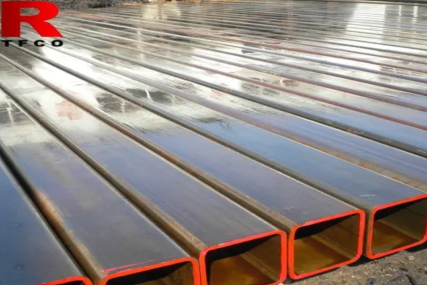
In modern construction, SHS is extensively used for columns, beams, and trusses due to its uniform square geometry. This shape allows for easy connection with other structural components, making it ideal for modular and prefabricated construction methods. SHS is particularly popular in high-rise buildings, commercial complexes, residential developments, and office towers, where strength, durability, and design flexibility are crucial.
The predictable performance of SHS under both vertical and lateral loads ensures stability even in tall or complex structures. Additionally, the steel can be painted, galvanized, or powder-coated to enhance corrosion resistance, ensuring that exposed structures maintain their integrity and appearance over decades. This combination of structural reliability and aesthetic appeal makes SHS a preferred choice for modern architectural designs.
SHS plays a vital role in industrial applications, providing frameworks for machinery supports, storage racks, cranes, and assembly lines. Its high load-bearing capacity allows it to sustain heavy equipment and repeated stress without deformation. Prefabricated SHS components can be bolted or welded quickly, accelerating assembly and reducing labor costs.
The smooth surfaces and uniform profiles of SHS make it ideal for conveyor supports, scaffolding, platforms, and mezzanine structures in factories. These properties not only improve operational efficiency but also enhance workplace safety by providing stable, robust structures capable of withstanding dynamic industrial environments.
Square hollow structural sections are widely used in bridge construction, pedestrian walkways, and transportation infrastructure. Their inherent resistance to bending and torsion makes them suitable for dynamic load-bearing applications, including vehicular traffic, wind, and vibration. SHS enables engineers to design lightweight yet strong bridge trusses, girders, and support beams, optimizing material usage without compromising safety.
Additionally, the versatility of SHS allows it to be adapted for long spans, cantilevered designs, modular bridges, and retrofitting projects, offering cost-effective solutions for both new construction and infrastructure maintenance.
In agriculture, SHS is widely used for greenhouses, storage facilities, barns, irrigation frameworks, and livestock enclosures. Its strength and corrosion resistance make it ideal for outdoor exposure to sun, rain, and humidity. SHS can span large areas without intermediate columns, creating open, unobstructed spaces for storage, cultivation, or livestock management.
The low maintenance requirements and long service life of SHS provide economic efficiency, which is essential for farms and agricultural businesses that operate on tight budgets while requiring durable structures.
SHS is increasingly used in stadiums, sports arenas, recreational centers, and gymnasiums for roofing structures, seating frameworks, and protective enclosures. Its ability to support large spans without excessive weight makes it suitable for cantilevered roofs, suspended structures, and open-plan sports facilities.
Architects value SHS for its clean lines and uniform appearance, allowing functional structures to also be visually appealing. The combination of strength, lightweight design, and aesthetic flexibility supports innovative architectural solutions in sports and recreational projects.
Marine and offshore industries benefit from SHS due to its strength-to-weight ratio, durability, and corrosion resistance. SHS tubes are used in piers, offshore platforms, docks, and rig frameworks, where reducing weight is critical for installation efficiency and operational stability. Galvanized or coated SHS sections can withstand saltwater exposure, harsh maritime conditions, and heavy loads, ensuring long-term performance and safety in challenging environments.
Beyond conventional uses, SHS is frequently customized for furniture frameworks, storage solutions, modular cabins, industrial racks, and mechanical supports. Its versatility allows manufacturers to produce tailored solutions for unique project requirements, including custom load-bearing capacities, finishes, or dimensional specifications. The square profile facilitates easy connection with other SHS or structural elements, making it an ideal choice for modular and prefabricated construction.
Thanks to this adaptability, SHS remains a go-to solution for engineers and designers seeking materials that combine strength, durability, and design flexibility across a diverse range of industries and applications.
The widespread adoption of Square Hollow Structural Sections (SHS) across industries is driven by a combination of unique structural and practical advantages.
First, SHS provides uniform load distribution, which ensures structural stability under both vertical and lateral loads. This characteristic is particularly valuable in applications such as high-rise buildings, bridges, and industrial frameworks, where uneven stress could compromise safety or durability.
Second, the high strength-to-weight ratio of SHS reduces material usage without sacrificing performance. By using less steel while maintaining equivalent strength compared to solid sections, SHS lowers construction costs, reduces foundation loads, and improves overall project efficiency.
Another key advantage is design flexibility. The uniform square geometry allows architects and engineers to create innovative solutions, from modern architectural features to complex industrial structures. This flexibility supports creative designs, modular construction, and prefabricated systems.
Ease of fabrication and assembly further enhances SHS’s popularity. Prefabricated sections can be cut, welded, or bolted quickly, accelerating construction timelines and reducing labor costs, particularly in large-scale industrial and infrastructure projects.
Additionally, SHS offers excellent corrosion resistance and long-term durability. Coatings, galvanization, or powder finishes protect it from weathering, chemical exposure, and moisture, ensuring minimal maintenance and extended service life.
Finally, SHS’s versatility across multiple industries—including construction, industrial facilities, marine, and offshore applications—makes it a reliable and cost-effective solution for diverse structural needs. Its combination of performance, efficiency, and adaptability has cemented SHS as a cornerstone in modern engineering and construction.
Square Hollow Structural Sections (SHS) have proven themselves as a versatile and reliable solution for modern construction and industrial needs. Their combination of strength, durability, and adaptability makes them ideal for a wide range of applications, including high-rise buildings, bridges, industrial frameworks, agricultural structures, sports facilities, and offshore installations.
For businesses and engineers looking for high-quality, precision-engineered SHS steel tubes, working with a trusted supplier is essential. www.tjfriendsteelpipe.com offers a comprehensive range of SHS products suitable for diverse applications. To learn more about their solutions and how they can support your projects, consider contacting their team for professional guidance and product details.
