
Views: 358 Author: Site Editor Publish Time: 2026-03-20 Origin: Site


A safe scaffold begins with load control. That is why platform design deserves more attention than many buyers give it. A Scaffolding Plank does more than create a walking surface. It helps manage weight, movement, and overall system stability at height. When load demand rises, material grade, plank thickness, width, span, and surface treatment all begin to matter more. Galvanized steel systems stand out because they combine structural strength with lasting surface protection. In this article, we look at how smart plank engineering supports higher load capacity, steadier performance, and better jobsite value for demanding scaffold applications.
Material grade shapes how a Scaffolding Plank behaves under working loads. Stronger structural steel helps the plank resist bending, local deformation, and repeated stress during daily use. TFCO lists Q235 and Q345 steel for its scaffold steel ladder beam product family, which is useful because grade selection affects yield behavior, stiffness balance, and service reliability. In practical terms, the right steel grade supports steadier performance when workers, tools, and stored materials all act on the same platform zone. That is why load capacity begins with metallurgy, not surface appearance.
Dimensions drive load behavior in direct ways. A thicker Scaffolding Plank usually resists flexing better, while width affects walking area and load distribution. Span also matters because longer unsupported lengths increase bending demand. TFCO publishes 3.0 / 3.2 / 4.0 mm thickness, 300 mm width, and 1–6 m length, which makes dimensional selection part of the engineering discussion rather than a simple catalog choice. OSHA also requires platform units to be installed so adjacent gaps stay at 1 inch (2.5 cm) or less in typical cases, which reinforces the value of dimensional consistency across plank systems.
Consistency matters when platforms carry repeated loads over time. A galvanized steel Scaffolding Plank keeps its geometry and surface condition more stable because zinc coating helps defend the steel substrate from corrosion-driven section loss. Once corrosion reduces steel thickness, actual performance may drift from original design intent. Hot-dip galvanizing helps slow that process. The American Galvanizers Association notes that the zinc patina can reduce zinc corrosion to about 1/30 the rate of bare steel in the same environment, while the coating also adds a durable protective barrier. That stability supports more predictable structural behavior across multiple project cycles.
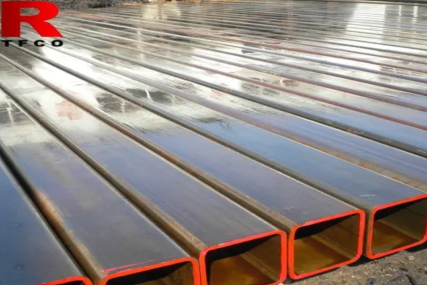
Geometry is a major reason steel plank systems perform well. Section shape, rib layout, and formed edges can improve stiffness without making the platform unnecessarily bulky. Better stiffness helps reduce visible bounce and keeps walking surfaces steadier under live load. That matters on busy sites where workers need confidence at height. Even when two planks use similar steel, the one with better section geometry often distributes stress more effectively. In engineering terms, a stronger geometric profile helps a Scaffolding Plank convert material strength into usable load performance on the job.
A Scaffolding Plank performs best when it works as part of a complete system. Good connection fit helps the platform transfer load into ledgers, frames, and support points without unwanted movement. Poor fit can create uneven bearing and less stable footing, even when the plank itself looks strong. OSHA requires platforms on working levels to be fully planked or decked, and it also sets practical spacing expectations for platform units. Those rules show that platform performance is about how the deck integrates into the scaffold, not only about the plank’s raw material.
Outdoor work exposes steel to moisture, air, dust, and jobsite abrasion. A galvanized finish helps a Scaffolding Plank keep more of its original structural section through those cycles. Galvanizing works by forming zinc-iron alloy layers that are metallurgically bonded to the steel, creating durable protection instead of a simple surface film. Galco explains that batch hot-dip galvanizing commonly produces coatings around 45–85 μm, and thicker coatings can also be specified in some structural applications. More reliable surface protection helps preserve long-term load reliability in demanding environments.
| Engineering Factor | Published / Referenced Data | Why It Matters for Load Capacity | Practical B2B Use |
|---|---|---|---|
| Steel material | Q235 / Q345 | Supports structural strength selection | Match grade to duty level |
| Thickness | 3.0 / 3.2 / 4.0 mm | Thicker sections usually resist flexing better | Choose by load plan and span |
| Width | 300 mm | Influences bearing area and deck layout | Helps standardize platform planning |
| Length | 1–6 m | Affects span and support spacing decisions | Fit plank length to scaffold bay |
| Surface | Hot-dip galvanized / painted | Protects steel against corrosion | Better outdoor service continuity |
| Packing | By bundle | Improves handling and delivery flow | Easier site logistics and stock control |
The table above combines TFCO’s published product data and load-oriented interpretation. It should be used as a procurement guide, not as a substitute for project-specific engineering review.
Hot-dip galvanizing protects steel by coating it in zinc after immersion in molten metal. This process forms bonded alloy layers that are durable and easy to inspect. For a Scaffolding Plank, that means better resistance against moisture, rain exposure, and repeated site handling. Galco notes that the coating is reproducible, easy to check, and typically continuous when sound in appearance. In practical scaffold use, this kind of protection helps keep the steel section intact, which supports a more dependable load path and a cleaner service profile across outdoor projects.
Oxidation is not just a visual issue. It can reduce section quality over time and weaken confidence in repeated-use scaffold parts. TFCO’s product page highlights corrosion resistance and oxidation resistance as key benefits of its HDG-based scaffold product. That aligns with broader galvanizing data. The American Galvanizers Association explains that the zinc patina becomes an added passive barrier after natural exposure cycles, slowing further corrosion and improving durability. For buyers managing fleets of scaffold parts, this means service life and structural consistency can both improve when galvanized protection is part of the design.
Repeated loading and repeated deployment are normal in scaffold work. A galvanized Scaffolding Plank is well suited to this pattern because the coating delivers uniform protection and good abrasion resistance in real jobsite handling. The American Galvanizers Association notes that hot-dip galvanized steel has long been used in industrial, utility, and infrastructure settings because of durability, complete coverage, and abrasion-resistant intermetallic layers. For contractors, this translates into steadier asset performance over many project cycles. The system stays easier to plan, easier to inspect, and easier to trust under recurring use.
OSHA’s capacity rule gives buyers a clear baseline. Each scaffold and scaffold component must support its own weight plus at least 4 times the maximum intended load, and scaffolds must be designed by a qualified person and loaded according to that design. For a Scaffolding Plank, this means capacity should never be judged by casual estimates or visual confidence alone. It should be tied to engineering review, expected personnel load, tools, materials, and working pattern. Buyers who start from OSHA’s rule usually make stronger, more defensible platform decisions.
EN 12811-style load classes help buyers connect platform choice to task type. Afix summarizes six common scaffold load classes, from Class 1 at 0.75 kN/m² for very light inspection work to Class 6 at 6.00 kN/m² for heavy masonry and supply-platform use. This kind of classification is useful because it turns the word “heavy-duty” into something more practical. A Scaffolding Plank should fit the working category, not just the project name. When load class and plank specification align, platform planning becomes more accurate and procurement becomes easier to justify.
Compliance improves more than paperwork. It supports better project communication between buyer, site manager, installer, and inspector. When a Scaffolding Plank is selected using recognized capacity rules, dimensional controls, and coating standards, each party can evaluate it from the same technical baseline. That lowers ambiguity during planning and helps keep the scaffold system aligned from purchase to deployment. Compliance also supports EEAT-style content because it reflects practical experience, accepted standards, and verifiable technical details rather than vague marketing claims. In B2B decisions, that kind of clarity is often what moves a product from interest to approval.
| Load Class | Uniformly Distributed Load | Typical Work Type | What It Suggests for Scaffolding Plank Planning |
|---|---|---|---|
| Class 1 | 0.75 kN/m² | Inspection, very light work | Suitable for light access expectations |
| Class 2 | 1.50 kN/m² | Painting, pointing, cleaning | Supports light-duty work platforms |
| Class 3 | 2.00 kN/m² | Plastering, limited storage | Requires stronger routine platform design |
| Class 4 | 3.00 kN/m² | Masonry work, material storage | Calls for more robust plank selection |
| Class 5 | 4.50 kN/m² | Heavy maintenance, prefab work | Needs higher-duty support planning |
| Class 6 | 6.00 kN/m² | Heavy masonry, supply platforms | Best matched with high-load platform strategy |
This table summarizes the load-class ranges presented in the referenced EN-standard overview page and translates them into B2B platform-planning language.
Standardized dimensions reduce guesswork on site. When a Scaffolding Plank comes in predictable widths and lengths, platform layout becomes easier to plan across multiple bays and elevations. TFCO lists a 300 mm width and 1–6 m lengths, which supports structured planning for different scaffold setups. Standardization also helps crews estimate quantities, stacking space, and transport flow more efficiently. On busy projects, those operational gains matter. A consistent plank format supports smoother installation and helps contractors keep field decisions closer to the original plan.
Bundled packing and repeatable specs save time before installation even starts. TFCO states that its product is packed by bundle and also highlights support for delivery, transportation, storage, and order fulfillment. For B2B buyers, those details matter because scaffold systems move through warehouses, trucks, laydown areas, and active sites before they ever carry a worker. A Scaffolding Plank that arrives in consistent bundles and consistent sizes is easier to count, easier to stage, and easier to integrate into broader site schedules. That improves coordination across procurement and field teams.
Durability helps protect uptime. When galvanized planks resist corrosion and normal wear better, contractors spend less time cycling units out for surface degradation or premature replacement. The engineering benefit is simple: more reliable assets support more predictable project flow. Galvanizing sources also note uniform coverage and strong abrasion resistance, which are important on sites where scaffold parts are frequently moved, stacked, and reused. A durable Scaffolding Plank is not only a stronger product choice. It is also a planning advantage because it helps reduce disruption across repeated project phases.
Construction sites demand platforms that feel stable under active movement. Workers carry tools, shift position, and often share deck space with materials in immediate use. A galvanized Scaffolding Plank supports this environment because it combines structural steel capacity with corrosion protection, which helps the platform stay reliable across weather exposure and repeated assembly cycles. TFCO also positions its scaffold products for construction settings and high-altitude work, reinforcing that these systems are built for real site use rather than controlled indoor-only conditions. That jobsite fit is one reason they stay widely relevant.
Industrial maintenance often takes place in harsh service environments. Moisture, dust, chemicals in the air, and repeated setup all put pressure on scaffold components. In such settings, galvanized platform systems offer a practical edge because their zinc protection helps the steel maintain condition over time. The American Galvanizers Association specifically notes extensive use of hot-dip galvanized steel in petrochemical, industrial, and utility projects because of durability and complete coverage. For maintenance contractors, a galvanized Scaffolding Plank helps support repeatable access solutions where equipment reliability matters every day.
At height, confidence in the platform matters more. Movement feels sharper, and any instability becomes more noticeable to workers. That is why stronger, more durable Scaffolding Plank support adds value in high-altitude work. TFCO describes its scaffold-related products as suitable for construction sites, workshops, and places where high-altitude work is required. Combined with OSHA’s emphasis on qualified design and capacity compliance, that makes a strong case for choosing plank systems that balance load performance, dimensional fit, and corrosion resistance together. Better support at height helps crews work with more control and less interruption.
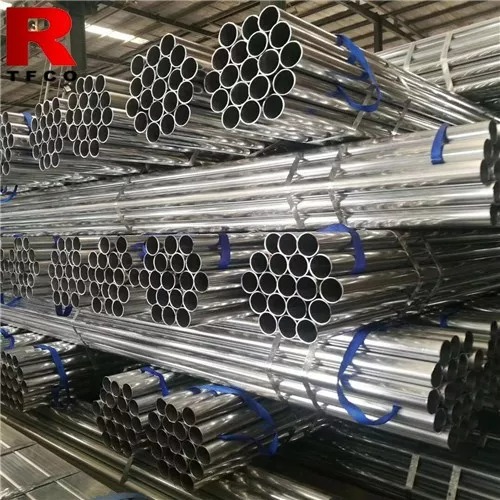
Start with the basics that shape structural behavior: steel grade, thickness, width, length, and coating. Those items tell you far more than a generic “heavy-duty” label. TFCO provides a useful example by publishing Q235 / Q345 steel, 3.0 / 3.2 / 4.0 mm thickness, 300 mm width, and 1–6 m lengths. Buyers should also confirm how those dimensions fit the intended bay layout and support spacing. When specification review begins at this level, a Scaffolding Plank can be matched to duty requirements more accurately and with better purchasing discipline.
Comparison works best when all products are measured on the same sheet. One plank may offer a stronger steel option, while another may offer a better coating or more suitable dimensions for the intended scaffold bay. Galvanizing method also matters because batch hot-dip galvanizing generally produces thicker, metallurgically bonded coatings than thinner continuous zinc processes used on some sheet materials. When buyers compare a Scaffolding Plank, they should ask how the material grade, thickness, length, and coating system work together. That approach leads to stronger load performance decisions and clearer supplier evaluation.
The best platform choice is the one that fits the work. Light inspection, routine finishing, and heavy masonry do not place the same demands on a scaffold deck. EN load classes make this clear, and OSHA capacity rules reinforce it from a safety standpoint. So the correct Scaffolding Plank is the one whose design aligns with the real duty level of the project, including people, tools, material presence, and working intensity. When buyers match plank design to actual duty instead of broad assumptions, they usually get stronger, safer, and more efficient results.
Maximizing load capacity is not about one feature alone. It comes from the way steel grade, section thickness, plank dimensions, system fit, and galvanized protection work together in one platform. A well-chosen Scaffolding Plank improves stability, service life, and confidence at height. It also helps crews plan better and work more smoothly across repeated project cycles. TFCO. adds practical value here through galvanized options, consistent specifications, bundled supply, and dependable service support. For buyers, that means a stronger path to safer platforms, longer-lasting assets, and better jobsite efficiency without sacrificing structural performance.
A: Steel grade, thickness, span, and system fit all improve load performance.
A: It resists corrosion, stays stable longer, and supports repeated project use.
A: Check Q235/Q345 steel, 3.0–4.0 mm thickness, width, length, and coating.
A: Yes. Width, thickness, and span directly influence stiffness and load capacity.
A: It helps match platform design to load class and safer work needs.
