
Views: 0 Author: Site Editor Publish Time: 2026-08-01 Origin: Site


Procuring the wrong scaffolding dimensions carries major commercial risk. Incompatible inventory directly causes project delays and regulatory compliance violations. You might assume standard sizes apply universally across the commercial construction industry. Many buyers make this dangerous assumption. However, hidden manufacturer variations demand exact measurement protocols. Differences in tube diameter, pin placement, and lock spacing matter heavily. Without precision, your framing equipment simply will not integrate correctly on the job site. Forced connections lead to catastrophic structural failures.
We designed this article to provide a rigorous evaluation framework. You will learn how to accurately measure, categorize, and select appropriate structural systems. We cover exact tape placement and critical component tolerances. Implementing these exact methods ensures seamless site integration. Following these guidelines guarantees strict OSHA compliance for your entire crew. Proper knowledge protects your budget and your workforce simultaneously.
Scaffolding frame dimensions are critically measured center-to-center (width) and top-to-bottom of the vertical tube (height), not by outer edge dimensions.
The standard 5-foot width remains the industry baseline, but height variations (e.g., 5'x5', 5'x6'4") dictate walk-through clearance and load capacity.
Selecting the right scaffold frame category—such as a steel ladder frame or a masonry frame—depends directly on the trade application and access requirements.
Long-term asset ROI relies on material selection (e.g., galvanized vs. painted) and ensuring strict compatibility with existing frame accessories and joint pins.
We must understand the financial drain of maintaining parallel fleets. Incompatible scaffolding systems waste valuable warehouse space constantly. Minor dimensional mismatches prevent structural components from locking together safely. This rigid constraint forces construction companies to buy duplicate parts unnecessarily. You tie up crucial capital in completely unusable inventory. Mixed inventory fleets also complicate daily warehouse logistics significantly. Daily truck loading tasks become a frustrating sorting nightmare. Workers waste hours searching for matching lock styles.
Improper cross-brace sizing compromises structural integrity immediately. Crews sometimes attempt to force mismatched braces onto lock pins. Forced fits create highly unstable vertical towers. They directly violate strict OSHA stability requirements. Your site safety inspectors will flag these unauthorized setups immediately. Fines and mandatory site shutdowns cost far more than proper measurement. Safety demands absolute precision during the initial procurement phase. You cannot compromise on dimensional accuracy.
Precise dimension matching accelerates tower erection times significantly. Crews work much faster when parts slide together smoothly. Smooth assembly directly impacts your hourly labor costs. You improve overall project efficiency from day one. When a truck arrives with incompatible parts, the entire site halts. Workers stand idle while managers source replacement components. Standardized sizing eliminates dangerous guesswork for your assembly teams. Accurate dimensions keep your labor budget safely in the green.
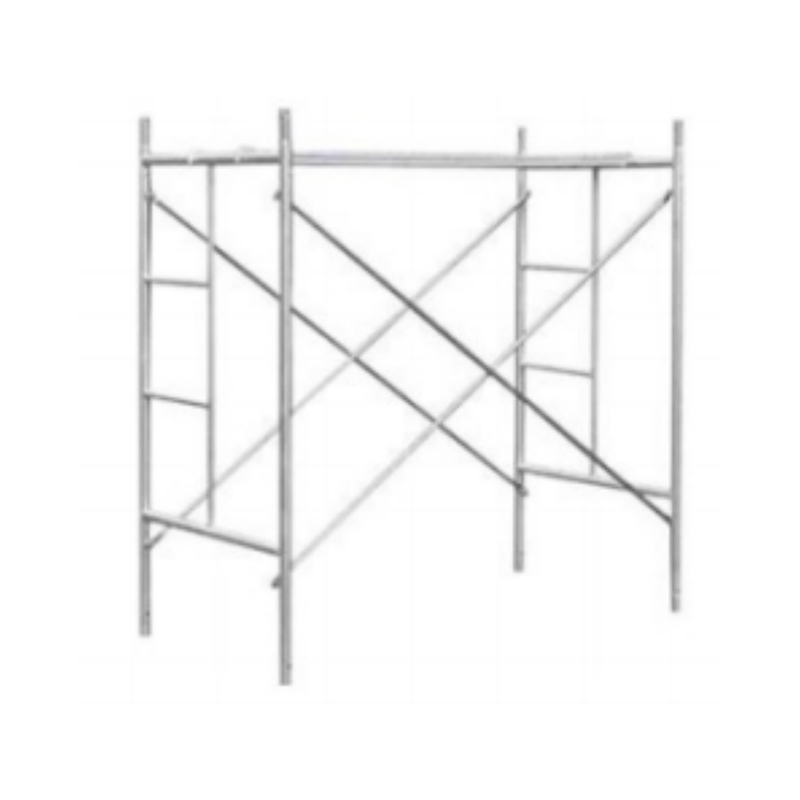
Measuring framing equipment requires strict adherence to industry protocols. Precision prevents dangerous wobble in tall towers.
Industry standards demand the center-to-center measurement method. You must measure from the exact center of one vertical leg tube. Extend your tape measure straight across the horizontal plane. Stop at the exact center of the opposite vertical leg. This data point provides your true standard width. We strongly warn against a very common error. Do not measure from the outside edges of the tubes. This mistake throws off all subsequent cross-brace calculations. The mathematical formula for bay length relies entirely on center-to-center data.
Height evaluation requires equally strict tape measurement practices. Measure from the very top rim of the vertical tube. Pull your tape straight down to the bottom rim. This technique gives you the true structural height. You must exclude the inserted pin from this measurement. Only measure the base structural tube itself. Including the pin inflates the height falsely. False heights lead to dangerously uneven platform decks.
Lock spacing dictates your cross brace geometry entirely. Measure the vertical distance between the top and bottom lock pins. Both pins sit welded on the same vertical leg. We call this specific distance the "drop" measurement. This drop measurement dictates the required cross brace length. The lock drop acts as a critical mathematical variable. If the drop measures exactly 27.5 inches, your brace must match exactly. Forcing a brace bends the diagonal tube. A bent tube loses its structural compression strength.
Measure the outer diameter using precise digital calipers. Common standard sizes include 1.625" and 1.69" O.D. The outer diameter impacts structural load ratings heavily. It determines base plate compatibility entirely. Wall thickness dictates the inner diameter profile. Thicker walls carry significantly more weight safely. A narrow stem inside a large tube causes catastrophic wobble. This wobble amplifies dangerously as the tower grows taller.
Always use a calibrated tape measure to prevent fractional errors.
Use digital calipers for outer diameter and wall thickness readings.
Create a standardized logbook for all incoming yard inventory.
Selecting the correct frame category dictates your daily site workflow. Different trades require completely different access solutions.
Typical dimensions measure exactly 5' Wide by 5' High. They feature an exceptionally high load capacity. You will find them ideal for heavy material staging. Bricklayers prefer this rigid style for heavy mortar tubs. The horizontal rungs offer multiple tie-off points. The square geometry evenly distributes massive concrete loads. The design requires workers to climb over the horizontal bars. Workers cannot walk straight through them. You sacrifice pedestrian mobility for absolute structural stability.
Typical dimensions span 5' Wide by 6'4" High. Some regional variations measure 6'8" High. They provide an unobstructed passageway for workers. Personnel movement flows easily across connected platform levels. Crews carry tools safely without tripping hazards. Painters and electricians rely heavily on this open design. However, the open arch removes a critical horizontal cross-member. They possess a lower lateral load threshold compared to box frames. You must account for this reduced capacity during planning.
Typical dimensions include a 3' Narrow or 5' Wide base. Heights vary frequently from 3' up to 6'4". They feature vertically integrated ladder rungs. Built-in rungs eliminate the need for separate attachable ladders. You save setup time and reduce loose component counts. Narrow versions slip easily into tight elevator shafts. They fit perfectly inside residential stairwells. Workers climb safely inside the scaffold footprint. This internal climbing method prevents outward tipping hazards.
Category Type | Typical Dimensions | Primary Advantage | Load Focus |
|---|---|---|---|
Mason / Box Frame | 5' W x 5' H | Maximum weight capacity | Heavy materials (brick, mortar) |
Walk-Through Frame | 5' W x 6'4" H | Unobstructed personnel movement | Light materials, high foot traffic |
Steel Ladder Frame | 3' W or 5' W x Varied H | Built-in vertical access | Confined spaces, stairwells |
Your material choices dictate the lifespan of your entire fleet. Proper finishes protect the steel from aggressive job site environments.
You must assess the upfront cost versus lifecycle ROI carefully. Hot-dipped galvanized units thrive in harsh marine environments. They survive chemical plant exposure without rapidly degrading. Zinc protects the microscopic steel pores from moisture. Powder-coated steel costs less initially at checkout. However, surface finishes impact the visual identification of structural fatigue. Rust bubbles under painted surfaces often hide deep hairline fractures. Galvanized surfaces reveal structural stress and cracks much more clearly. Coastal salt spray destroys painted steel within mere months.
Base dimensions directly dictate your selection of peripheral attachments. Side brackets must match the tube outer diameter exactly. Base plates and leveling jacks require identical inner diameter tolerances. Loose accessories create dangerous, unpredictable sway. Tight-fitting components transfer weight directly into the solid ground. Never force an accessory onto an incompatible vertical tube.
The coupling pin plays a critical structural alignment role. Pin diameter requirements demand absolute precision. A joint pin features a raised central collar. This collar acts as a hard stop between stacked frames. It ensures weight transfers directly from tube to tube. Mismatched pins stand as a primary cause of joint failure. They directly cause dangerous stack swaying in high winds. Loose pins allow the tower columns to hinge improperly.
Mixing powder-coated and galvanized components in highly corrosive coastal environments.
Using undersized leveling jacks that wobble inside the vertical leg.
Ignoring rust accumulation around the factory welds before assembly.
Before engaging suppliers, you must audit your current assets completely. Map your existing inventory dimensions meticulously to avoid mismatched fleets.
Thoroughly document your current yard stock before buying anything. Use these specific data points for your vendor discussions. Bring a digital caliper out to the storage yard. Clean the rust off the tubes before measuring.
Measure your current fleet width center-to-center precisely.
Record the exact lock drop distance on all legs.
Document the tube O.D. using calibrated digital calipers.
Measure the wall thickness to confirm weight capacities.
Catalog the exact lock styles (e.g., snap-on, drop-lock).
Question potential vendors heavily on their manufacturing consistency. Minor factory variances destroy compatibility over time. Request certified steel grade documentation from their engineers. High-grade carbon steel bends rather than snapping abruptly. Ask about their quality control testing protocols. Reliable manufacturers publish their dimensional tolerance thresholds publicly. Quality vendors gladly provide these engineering documents upon request.
Request physical samples before placing large bulk orders. Obtain detailed engineering specs in digital PDF catalogs. Cross-reference these catalog specifications with your existing on-site stock. Physical verification prevents massive ordering mistakes. Test the new sample with your oldest yard equipment. Ensure the locks engage smoothly without hammer strikes.
Standard dimensions remain "standard" only within matching lock types. Matching tube diameters is strictly required for safe assembly. We recommend standardizing your entire fleet immediately. Choose a single manufacturer's dimensional profile and stick with it. This unified strategy mitigates your overall commercial risk heavily. You maximize component interchangeability across all your active job sites. Begin by auditing your yard and measuring center-to-center widths. Verify your pin sizes before your next procurement cycle. Keep safety and dimensional precision at the forefront.
A: The 5' x 5' mason frame acts as the primary standard for heavy loads. The 5' x 6'4" walk-through frame serves as the industry baseline for pedestrian access. Both variations form the core of most construction inventory fleets globally.
A: You should never mix components from different manufacturers. Even if overall width and height match perfectly, minor variations remain. Differences in lock styles, lock spacing, and tube thickness compromise stability. Mixing brands directly violates strict safety regulations and voids manufacturer warranties.
A: Cross brace lengths depend on a specific mathematical relationship. You must measure the frame's vertical lock spacing, known as the drop. Combine this drop measurement with your desired distance between frames, known as the bay length. This calculation dictates your required cross brace length.
A: Overall width and height remain standard regardless of tube thickness. However, wall thickness drastically affects the weight capacity of the unit. It also dictates the exact inner diameter. This requires you to size joint pins and base plates accordingly to prevent dangerous swaying.
