
Views: 226 Author: Site Editor Publish Time: 2026-04-13 Origin: Site


Can a high-rise project really stay efficient with a weak access system? In most cases, it cannot. A strong Scaffolding Frame and a reliable scaffolding plank help crews move faster, carry materials more easily, and stay organized at every level. In this article, you will learn how the right scaffold system supports safer work, smoother coordination, and better building efficiency.
On a tall building, one delay can spread across several trades. Masons, façade crews, painters, and installers often work in stacked zones. They need firm platforms and predictable movement paths. A robust Scaffolding Frame helps preserve that rhythm. OSHA requires supported scaffold members to be plumb and braced to prevent swaying and displacement. That matters because stable geometry reduces resets, re-leveling, and stop-start work. It keeps the day focused on output, not correction.
Access design affects labor efficiency more than many buyers expect. Workers lose time every time they pause, detour, or wait for a safer route upward. OSHA says employees must be able to safely access any scaffold level more than 2 feet above or below an access point, and it explicitly forbids climbing cross-braces as access. Built-in access frames and proper ladder solutions therefore support both compliance and speed. When access is planned into the frame system, crews spend more minutes working and fewer minutes repositioning.
Material handling drives real jobsite efficiency. Tools, boards, sealants, and small components must stay close to the work face. A robust Scaffolding Frame supports that goal by creating reliable bays and working levels that are fully planked or decked. OSHA requires working platforms to be fully decked and generally at least 18 inches wide. Those basics matter because they help teams stage light materials more cleanly and move them with less friction. The result is smoother execution on repetitive exterior tasks. In high-rise work, access time often hides inside labor costs. A frame layout that cuts small daily delays can improve weekly output in a visible way.
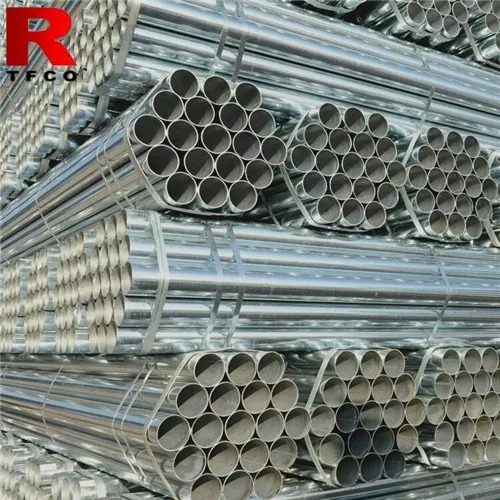
A frame scaffold works best when its geometry stays true under daily movement. Cross braces play a major role here. TFCO describes them as diagonal components that connect frames for stability and rigidity. OSHA adds the performance side: structural members must be braced to prevent swaying and displacement. In high-rise use, that rigidity supports better worker confidence, cleaner alignment, and more dependable platform behavior. It does not only protect the structure. It also protects work pace.
Stacked frames need accurate vertical connection. That is where joint pins matter. TFCO lists joint pins as core frame-scaffold components and provides standard pin sizes in 36 mm outside diameter, 225 mm length, and three thickness options. Those small parts help keep frame sections connected in a repeatable way. In high-rise work, consistent alignment helps crews erect, extend, and recheck the scaffold more efficiently. Better fit-up supports smoother continuity from one lift to the next.
High-rise sites repeat the same forces all day. Workers climb, materials shift, platforms stay loaded, and wind exposure can change conditions fast. OSHA requires each scaffold and scaffold component to support its own weight and at least four times the maximum intended load. It also requires that scaffolds be designed by a qualified person and loaded according to that design. Those rules show why robust frame systems matter. Good performance under repetition helps teams keep moving without avoidable disruption. Buyers often compare prices first. In practice, connection quality and bracing consistency usually have a bigger effect on site performance.
TFCO’s product page highlights the Steel Ladder Scaffolding Frame as a modular welded system for access to elevated work areas. That matters on high-rise jobs where teams move between lifts many times each day. OSHA says integral access frames must be designed as ladder rungs, use uniform rung spacing, and provide rest platforms at set vertical intervals. When those access details are built into the system, movement becomes faster and more predictable. That supports crew flow across long exterior elevations.
Good layout reduces congestion. Workers need space to pass, handle tools, and reach the façade without crowding each other. OSHA’s platform rules support that logic by requiring full decking and minimum platform widths in most cases. A clean Scaffolding Frame layout also helps different trades share elevation zones in a more orderly way. That makes sequencing easier. It also helps site managers control movement patterns instead of reacting to them.
Confidence has real production value. Workers move more steadily when handholds, ladder spacing, and platform transitions feel consistent. OSHA requires handholds, rung spacing, rest platforms, and stair dimensions for scaffold access systems because these details affect safe movement. On busy high-rise sites, that design discipline supports smoother starts, fewer hesitations, and better rhythm during repeated vertical travel. A robust Scaffolding Frame therefore supports both safety culture and practical speed.
Prefabricated frame systems help crews work faster because the parts are standardized and easy to assemble. TFCO describes frame scaffolding as modular and easy to assemble and disassemble. Other frame-scaffold guides make the same point about prefabricated systems supporting quick site installation. In a high-rise schedule, that speed matters because the scaffold must often rise in stages as envelope work expands. Faster erection means earlier access, and earlier access helps protect the master program.
Interruptions hurt tall projects more than low-rise work. One unstable section or poor connection can slow several dependent tasks. OSHA requires inspections by a competent person before each work shift and after events that could affect structural integrity. That tells us something simple: reliable scaffold systems reduce the chance of avoidable stoppages. A robust Scaffolding Frame supports steadier workflow because the system is easier to trust, easier to inspect, and easier to keep in service.
High-rise scaffolding rarely serves one trade only. It may support structural touch-up, blockwork, glazing prep, rendering, inspection, and finishing work over time. TFCO’s frame pages present the system as a steel solution designed for safety, stability, and load capacity across varied construction scenarios. That versatility supports schedule control because teams can keep using one robust access concept through several phases. Continuity helps reduce reconfiguration waste and training friction.
Tip: Ask suppliers about component compatibility across future project phases. A reusable frame logic can protect both time and inventory planning.
A high-rise scaffold performs like a system. The frame, cross brace, and joint pin each matter. TFCO’s product pages show one set of scaffold framework includes two main frames, two cross braces, and four joint pins. They also publish example dimensions and unit weights for each component type. That kind of component clarity helps buyers compare systems more intelligently. It also helps site teams plan transport, stacking, and erection in a more controlled way.
Before buyers compare coatings or price, they should check whether the basic parts work as a coherent system. The data below combines TFCO’s published frame, brace, and joint-pin examples, so readers can see how size, wall thickness, and unit weight affect handling and system planning.
| Component | Published size | Tube / thickness | Unit weight | Application value | Buyer note |
|---|---|---|---|---|---|
| Steel ladder scaffolding frame | 1219 × 1700 mm | Main tube 42 × 2.2 mm; inner tube 25 × 1.8 mm | 15.04 kg/pc | Common main frame size for access and working bays | Useful where crews need taller frame modules |
| Steel ladder scaffolding frame | 1219 × 1219 mm | Main tube 42 × 2.2 mm; inner tube 25 × 1.8 mm | 11.96 kg/pc | Mid-height module for staged elevations | Easier manual handling than 1700 mm frame |
| Steel ladder scaffolding frame | 1219 × 914 mm | Main tube 42 × 2.2 mm; inner tube 25 × 1.8 mm | 9.65 kg/pc | Compact lift option for lower sections | Good for tight sequencing zones |
| Steel ladder scaffolding frame | 1219 × 1700 mm | Main tube 42 × 2.2 mm; inner tube 25 × 2.0 mm | 15.28 kg/pc | Slightly heavier inner tube option | Check transport and stacking plans |
| Cross brace | 1829 × 1219 × 2198 mm | Ø21.3 × 1.4 mm | 3.08 kg/pc | Supports rigidity across larger bay geometry | Match brace size to frame layout |
| Cross brace | 1829 × 914 × 2045 mm | Ø21.3 × 1.2 mm | 2.48 kg/pc | Lighter brace option for common bay sizes | Confirm stiffness needs on taller runs |
| Cross brace | 1219 × 610 × 1363 mm | Ø21.3 × 1.0 mm | 1.41 kg/pc | Smaller bay brace for compact scaffold zones | Lower weight can help faster handling |
| Joint pin | 36 × 1.5 × 225 mm | OD 36 mm; thickness 1.5 mm | 0.344 kg | Vertical frame connection | Small part, major alignment role |
| Joint pin | 36 × 1.2 × 225 mm | OD 36 mm; thickness 1.2 mm | 0.288 kg | Vertical frame connection | Check fit and inventory count |
| Joint pin | 36 × 1.0 × 225 mm | OD 36 mm; thickness 1.0 mm | 0.245 kg | Vertical frame connection | Keep spare stock on site |
Tip: Small parts deserve big attention. On tall projects, missing braces or pins can slow erection more than heavy frames do.
Access should be chosen like a productivity feature. OSHA requires bottom rungs or steps to sit no more than 24 inches above the supporting level for several scaffold access types. It also sets maximum rung spacing at 16¾ inches for hook-on and integral access systems, and requires rest platforms at maximum 35-foot vertical intervals for certain ladder access. Those rules show what efficient access looks like in practice: repeatable, comfortable, and designed in from the start.
The right frame should match crew density, façade width, load intent, and tie pattern. OSHA says supported scaffold poles, legs, posts, frames, and uprights must bear on base plates and mud sills or another adequate firm foundation. It also requires ties, guys, or braces when supported scaffold height-to-base ratios exceed 4:1. So selection is not just about frame size. It is about how the whole scaffold will stand, carry, and connect on the actual building.
Efficiency starts during erection, not after it. TFCO’s product descriptions repeatedly frame the system as a set of connected elements, including main frames, cross braces, and joint pins. OSHA rules align with that idea by requiring scaffolds to be designed by a qualified person and loaded according to that design. When teams treat the scaffold as a full engineered access system, setup quality improves and work begins on a stronger foundation.
Daily readiness protects schedule performance. OSHA states that a competent person must inspect scaffolds and components before each shift and after any event that could affect structural integrity. It also requires base support, plumb members, proper bracing, and controlled loading. Those checks are not just paperwork. They help site teams catch loose connections, uneven support, and damaged parts before they affect labor output. Reliable inspection habits support reliable production.
High-rise efficiency depends on daily consistency. These published OSHA criteria show which access, stability, and platform details deserve attention before each shift. For procurement teams, the same checklist also helps compare supplier systems against real field requirements instead of marketing language alone.
| Inspection focus | OSHA requirement | Published value | Why it matters for efficiency | Practical note |
|---|---|---|---|---|
| Load capacity | Scaffold and component capacity | At least 4 × maximum intended load | Protects working continuity under planned loading | Never exceed rated capacity |
| Tipping restraint | Height-to-base trigger | More than 4:1 ratio requires restraint | Critical for tall supported scaffolds | Use tie, guy, brace, or equivalent |
| Tie / brace spacing, vertical | If width is less than 3 ft | Every 20 ft (6.1 m) or less | Supports control on narrow scaffold runs | Follow manufacturer where specified |
| Tie / brace spacing, vertical | If width is more than 3 ft | Every 26 ft (7.9 m) or less | Supports control on wider runs | Check top restraint placement |
| Tie / brace spacing, horizontal | Along scaffold length | At each end and every 30 ft (9.1 m) or less | Helps tall façade runs stay stable | Useful for long elevations |
| Platform width | General supported scaffold platforms | At least 18 in (46 cm) | Helps worker movement and material handling | Confirm task-specific exceptions |
| Platform gap | Adjacent units / platform to uprights | No more than 1 in (2.5 cm), unless justified | Reduces trip risk and tool drop risk | Wider spaces need justification |
| Ladder access trigger | Access requirement | Safe access needed when level is more than 2 ft from access point | Reduces delay and unsafe climbing behavior | Plan access before erection |
| Bottom rung height | Hook-on / attachable ladders | No more than 24 in (61 cm) | Smoother first step improves repeated use | Check after settling |
| Rung spacing | Hook-on / integral access | Maximum 16¾ in (42.5 cm) | Supports regular climbing rhythm | Uniform spacing matters |
| Integral access rung length | Built-in access frames | At least 8 in (20.3 cm) | Supports practical foot placement | Not a work platform if under 11½ in |
| Rest platform interval | Ladder / integral access | Maximum 35 ft (10.7 m) vertical intervals | Helps long climbs stay manageable | Very useful on high-rise runs |
| Stair rest platform interval | Stairway-type ladders | Maximum 12 ft (3.7 m) vertical intervals | Improves comfort and circulation | Good for heavy daily traffic |
| Stair width | Between stair rails | At least 18 in (46 cm) | Better flow for frequent movement | Check with site traffic plan |
Tip: Use this checklist during supplier review, not only during site inspection. It helps filter out systems that look strong but plan access poorly.
The best scaffold systems support logistics, not just elevation. They influence where crews enter, where light materials pause, and how trades share the façade. OSHA’s rules on stable foundations, plumb members, full decking, and formal access prove that scaffold performance depends on planning discipline. A robust Scaffolding Frame becomes more valuable when project teams align it with labor sequencing and material flow. Then it acts like a production platform, not a temporary afterthought. The strongest scaffold buying decision often starts in preconstruction. Early access planning usually pays back during façade execution.
A robust Scaffolding Frame keeps high-rise work stable, organized, and on schedule. It improves access, supports smoother crew coordination, and helps daily tasks move with less delay. For B2B buyers, TFCO. offers real value through connected frame systems, dependable components, and practical service that support safer, faster, and more efficient project execution.
A: A robust Scaffolding Frame improves access, stability, and workflow speed.
A: It helps crews move faster, position materials better, and reduce delays.
A: Strong frames, cross braces, and joint pins create reliable support.
A: Yes. Better access and faster setup help keep high-rise projects on track.
