
Views: 0 Author: Site Editor Publish Time: 2026-07-03 Origin: Site


Industrial procurement and structural contracting demand highly reliable materials. You cannot rely on basic definitions when sourcing critical infrastructure for major projects. Assessing legacy residential plumbing presents a similar challenge. We define this core material simply: it is steel piping coated in a protective zinc layer. This vital layer prevents immediate oxidation and rust. However, selecting the right material requires careful, informed evaluation. You must balance upfront cost efficiency and external durability against strict modern compliance standards. You must also weigh inherent internal corrosion risks over time. You will learn how manufacturing processes guarantee material integrity for harsh environments. We will detail precise technical specifications to guide your structural procurement strategy. Finally, you will discover clear frameworks for choosing alternative materials. Understanding these dynamics ensures your project remains structurally sound, financially viable, and fully compliant.
Core Function: The hot-dip zinc coating acts as a sacrificial anode, protecting the underlying steel from environmental exposure and rust.
Primary Modern Use Cases: Highly recommended for outdoor structural applications, scaffolding, fencing, and non-potable water/gas industrial transport.
Legacy Liabilities: No longer compliant or recommended for modern residential potable water systems due to internal scaling, restricted water flow, and potential lead accumulation risks.
Procurement Standards: Quality evaluation must rely on standardized metrics, specifically ASTM A53 for structural/pressure applications and schedule ratings (e.g., Schedule 40) for wall thickness.
Manufacturers produce high-quality piping through a rigorous hot-dip galvanization process. First, they clean the raw steel rigorously to remove scale and oils. Next, they submerge the cleaned steel into a bath of molten zinc. This bath typically reaches temperatures around 840°F. The intense heat triggers a metallurgical reaction. The zinc does not merely sit on the surface like paint. Instead, it forms a tight, interlocking alloy bond. This process ensures the protective layer adheres permanently to the substrate. Procuring authentic Galvanized Steel Pipe guarantees you receive this resilient metallurgical bond.
The external zinc acts as a "sacrificial" layer. Zinc is more electrochemically active than steel. If a scratch exposes the underlying metal, the surrounding zinc will corrode first. It sacrifices itself to protect the core structure. This dynamic significantly boosts your return on investment. You can expect a baseline lifespan of 40 to 50 years in rural or mild environments. However, you must account for site conditions. High-salt coastal regions or highly acidic industrial environments will severely reduce this lifespan. Proper environmental assessment is crucial before installation.
You must establish strict visual inspection criteria upon delivery. High-quality pipes exhibit several clear indicators of proper manufacturing. Look for a uniform coating thickness across the entire pipe length. Reject any shipments showing bare spots, heavy zinc drips, or flaking. Furthermore, you must verify proper thread protection. National Pipe Thread (NPT) ends require flawless zinc integration to prevent leaks. Inspect threads closely for burrs or uneven galvanization.
Project managers often favor this material for its exceptional cost-to-durability ratio. It offers lower initial material and application costs compared to stainless steel or copper. This cost advantage allows you to scale large projects efficiently. Furthermore, it boasts immediate installation readiness. You require no additional surface preparation, painting, or protective coating upon delivery. Crews can install it immediately. The mechanical strength remains a primary selling point. High tensile strength withstands severe physical impact. It easily handles high winds and heavy structural loads in challenging outdoor deployments.
A balanced evaluation requires acknowledging inherent limitations. External resilience does not guarantee internal longevity. Internal corrosion over time presents a major liability. When exposed to continuous water flow, the interior zinc coating degrades. This degradation leads to aggressive rust buildup. Tuberculation forms along the inner walls, severely restricting flow rates. You also face severe galvanic corrosion risks. Rapid degradation occurs if you connect it directly to dissimilar metals. For example, joining it to copper or brass creates an electrical reaction. The zinc rapidly deteriorates.
Always install dielectric unions when transitioning to copper piping.
Avoid deploying these pipes in hot water circulation systems, as heat accelerates zinc breakdown.
Regularly monitor internal pressure drops to detect early signs of tuberculation.
Material Strengths and Liabilities Overview
Evaluation Dimension | Strengths | Implementation Risks |
|---|---|---|
Financial Impact | Lower initial material cost than copper or stainless. | Eventual replacement costs due to internal scaling. |
Deployment Readiness | Ready upon delivery. No painting required. | Requires precise thread alignment and heavy lifting. |
Environmental Resistance | Excellent against UV, physical impact, and high winds. | Vulnerable to galvanic corrosion and internal rust buildup. |
Relying on premium Galvanized Steel Pipe from vetted suppliers mitigates many external risks, but internal limitations remain a fundamental chemical reality.
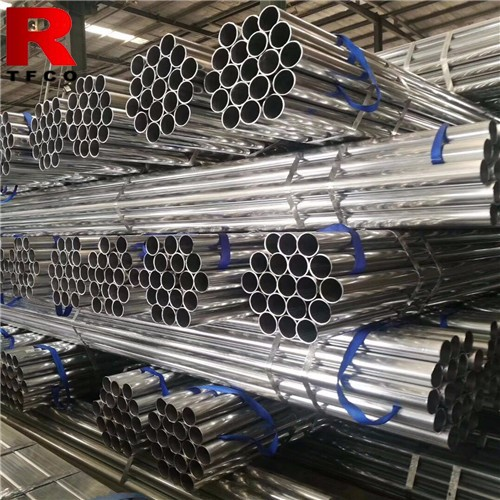
Modern engineering strictly regulates where you should deploy this material. Architecture and construction sectors utilize it extensively. You will find it commonly deployed for scaffolding, handrails, and robust chain-link fence posts. It provides unmatched rigidity for outdoor structural frameworks. The agricultural and automotive sectors also rely heavily on it. Farmers use it for large-scale, non-potable irrigation lines. Facility managers install it as protective bollards to defend equipment. Heavy-duty exhaust applications also benefit from its high temperature tolerance. These applications leverage external strength while ignoring internal potable water restrictions.
You must address the historical liability of pre-1980s residential plumbing. Builders once used these pipes extensively for drinking water. We now know this poses severe risks. As the interior zinc degrades, it creates uneven surfaces. These rusty internal traps catch lead particles flowing from upstream municipal lines. They also trap lead from old solder joints. Property managers need clear success criteria to manage these liabilities. You must identify definitive replacement triggers.
Low Water Pressure: Indicates severe internal tuberculation.
Discolored Water: Brown or rusty water signals active internal corrosion.
Leak Frequency: Multiple pinhole leaks suggest complete wall thickness failure.
The bottom line remains absolute: you should never shortlist this material for new potable water installations. Always specify modern alternatives for drinking water systems. However, for scaffolding and outdoor frameworks, Galvanized Steel Pipe remains the undisputed industry standard.
Quality procurement demands strict adherence to recognized industry standards. You must verify compliance before issuing purchase orders. ASTM A53 / A53M serves as the defining specification. It covers standard weight, black, and hot-dipped welded and seamless steel pipe. You must mandate ASTM A53 compliance when purchasing structural or pressure-rated pipe. Next, you must evaluate ASTM A123. This standard dictates specific requirements for zinc coating thickness and surface finish. It ensures the galvanization process meets minimal protective thresholds. Failing to verify these codes invites catastrophic structural failures.
Understanding dimensional criteria prevents costly installation delays. The industry standardizes dimensions through Nominal Pipe Size (NPS). NPS does not equal the exact outer diameter. It represents a dimensionless designator for pipe size. You must consult standard sizing charts to match NPS to actual measurements.
Pipe schedules dictate wall thickness. You must evaluate these schedules based on load-bearing requirements or expected pressure (PSI). Schedule 40 represents the standard thickness for general use. Schedule 80 provides a thicker wall for high-pressure or heavy-load environments. Proper specification prevents structural buckling.
Assess compatibility carefully when selecting fittings. You should exclusively use malleable iron threaded fittings. Ensure your chosen thread sealants match the specific application. Standard PTFE tape works for basic installations. Industrial environments often require specialized pipe dope. Specifying standard Galvanized Steel Pipe along with properly rated malleable fittings guarantees a leak-proof structural joint.
You need a robust decision framework to navigate competing materials. Do not default to one material for every scenario. Apply the following logic to shortlist materials accurately.
If your project requires potable water transport, disqualify galvanized immediately. Shortlist copper for maximum durability, despite its high cost. Alternatively, shortlist PEX or CPVC for low-cost, rapid installation. If your project requires underground gas or oil transport, evaluate black iron pipe. You can also look at factory-coated steel. The zinc coating flakes off over time and clogs delicate gas valves. If your project requires highly corrosive chemical transport, shortlist stainless steel (304/316) or specialized heavy-duty PVC.
Material Shortlisting Chart
Project Requirement | Primary Recommendation | Disqualified Material | Reasoning |
|---|---|---|---|
Potable Water Transport | Copper, PEX, CPVC | Galvanized Steel | Internal scaling and potential lead particle trapping. |
Underground Gas Transport | Black Iron Pipe | Galvanized Steel | Zinc flaking severely clogs gas regulators. |
Corrosive Chemicals | Stainless Steel (304/316) | Standard Steel | Standard zinc degrades rapidly under acidic conditions. |
Outdoor Structural Frameworks | Galvanized Steel | PEX, CPVC | Plastics lack mechanical strength and UV resistance. |
Move from evaluation to active procurement using a structured approach. Follow these precise next-step actions to secure your materials.
Define Exact Environmental Conditions: Document local humidity, ambient salinity, and soil acidity to estimate coating lifespan.
Calculate Required Loads: Determine exact mechanical loads and pressure requirements to finalize your NPS and Schedule ratings.
Request Mill Test Reports (MTRs): Demand these documents from suppliers. MTRs verify exact chemical composition and ASTM compliance.
Verify Thread Standards: Confirm all orders specify NPT threads for seamless integration with domestic fittings.
Sourcing high-grade Galvanized Steel Pipe directly from verified factories simplifies this procurement checklist and ensures full standard compliance.
Galvanized steel pipe remains an unmatched, cost-effective solution for structural integrity and outdoor environmental resistance. The hot-dip manufacturing process ensures decades of reliable performance against the elements. However, modern compliance dictates keeping it strictly out of drinking water systems and underground gas lines. By evaluating its strengths against specific project demands, you secure resilient infrastructure while avoiding long-term liabilities. We encourage buyers to audit their specific use-case against ASTM standards immediately. Contact a specialized metallurgy and piping supplier to obtain accurate sizing, verify MTRs, and secure competitive quotes for your next project.
A: You can identify it by its distinctive silver-gray color. It typically features threaded ends for connection. Unlike black iron, it lacks exterior rust due to the protective zinc coating. A strong magnet will stick to it, confirming the steel core.
A: The objective lifespan is 40 to 50 years maximum under normal conditions. This timeline means any residential water pipe installed before the 1980s is currently at or past its structural failure point.
A: Modern safety consensus says no for new builds. Existing legacy systems require immediate water quality testing. Aging zinc traps lead particles and restricts flow, making it unsafe for continued potable water consumption.
A: Yes, but it carries a severe implementation risk. You must completely grind away the zinc coating around the weld zone first. Vaporized zinc produces highly toxic gases that cause "metal fume fever" in welders.
